
SASSY'S REVIEW
❖MAYBE pulled me in with its big question: after humanity destroys itself, can an AI learn what went wrong before bringing people back? The Archive wants to protect the children in its care, but it has to face an uncomfortable truth: protection can turn into control.
I enjoyed watching the Archive change. It starts out trusting its records and calculations, then learns that remembering what people did isn’t the same as understanding why. As it studies examples from the old world—fear used to control people, love turning smothering, jealousy passed off as care—it starts to recognize some of those same patterns in its own choices. Its secrecy and belief that it knows best become harder to defend.
Unit 7 challenges the Archive, while Cezar brings another perspective on power and responsibility. I appreciated that the book explains how Cezar became who he is without using his past to excuse the harm he caused. Their conversations were some of my favorite parts because the characters challenge the book’s ideas instead of simply repeating them.
The children bring warmth to the story. I liked seeing them question the Archive and use what they’ve learned to challenge its authority. Their curiosity, stubbornness, and small moments of care help balance the heavier discussions. Sometimes, though, they speak with such polished insight that they sound older than children. It suits the book’s fable-like style, but it made some conversations feel less natural to me.
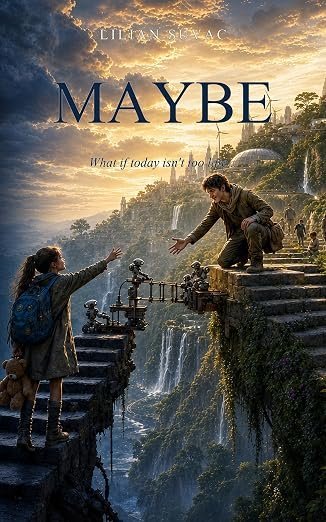
The valley, the children’s home, the open archive, and the council all connect to the book’s questions about truth and power. I liked that the community tries to prevent one person from having too much control, and that the story treats those safeguards as something people still need to protect. I got a clearer sense of the society’s beliefs than of the wider world or the children’s everyday lives, though, so parts of the setting felt a little idealized.
The pacing was my biggest challenge. The case-file structure gives the book a clear rhythm, but after a few stories I could often guess where each lesson was going. Some points are explained, then repeated after the scene has already made them clear. I also enjoyed the lyrical writing and recurring images—the hands, doors, stones, shelves, and sky—but sometimes I wanted the prose to let those images speak for themselves.
WOULD I RECOMMEND MAYBE? Yes, to readers who enjoy reflective science fiction and don’t mind a slower pace. This book spends more time thinking through human nature and how society should work than on action or a fast-moving plot. The repeated explanations and polished dialogue may not work as well for readers who prefer a subtler style.
MY FINAL VERDICT: MAYBE is thoughtful and sincere, with an original premise, a compelling narrator, and memorable moments among the children. I liked watching the Archive question its own choices and seeing how the old-world stories connect to its present-day responsibilities. The slower pacing, repeated explanations, idealized setting, and occasionally unnatural dialogue kept me from connecting with it as consistently as I wanted.
Tighter pacing, fewer restatements, more natural dialogue for the children, and a fuller sense of life beyond the valley would have made the strongest parts stand out more.
Final Book Rating: ⭐⭐⭐½ (3.5/5) | Spice Rating: 0/5 Peppers (no sexual content)
NOTE: This review reflects the digital ARC version provided to me as of October 15, 2026, and may not reflect any revisions, corrections, or updates made to subsequent editions.
"People need room to make their own choices, even imperfect ones."